
Introduction
Managing a modern hospital involves much more than treating patients. Doctors, nurses, pharmacists, laboratory professionals and other healthcare teams must work together to ensure that every patient receives the right care at the right time. This requires accurate communication, timely medical orders and easy access to clinical information.
However, many healthcare facilities still experience challenges with manual processes, handwritten prescriptions, paper-based investigation requests and communication delays between departments. These challenges can increase administrative workloads and create opportunities for mistakes.
To address these issues, hospitals are increasingly adopting Computerized Physician Order Entry (CPOE) software. This technology allows doctors and authorized healthcare professionals to enter medical orders directly into a digital system, helping different departments receive and process instructions more efficiently.
For hospitals in Dubai and across the UAE, implementing a reliable CPOE system can be an important step towards improving clinical workflows and building a more connected healthcare environment.
What Is Computerized Physician Order Entry (CPOE)?
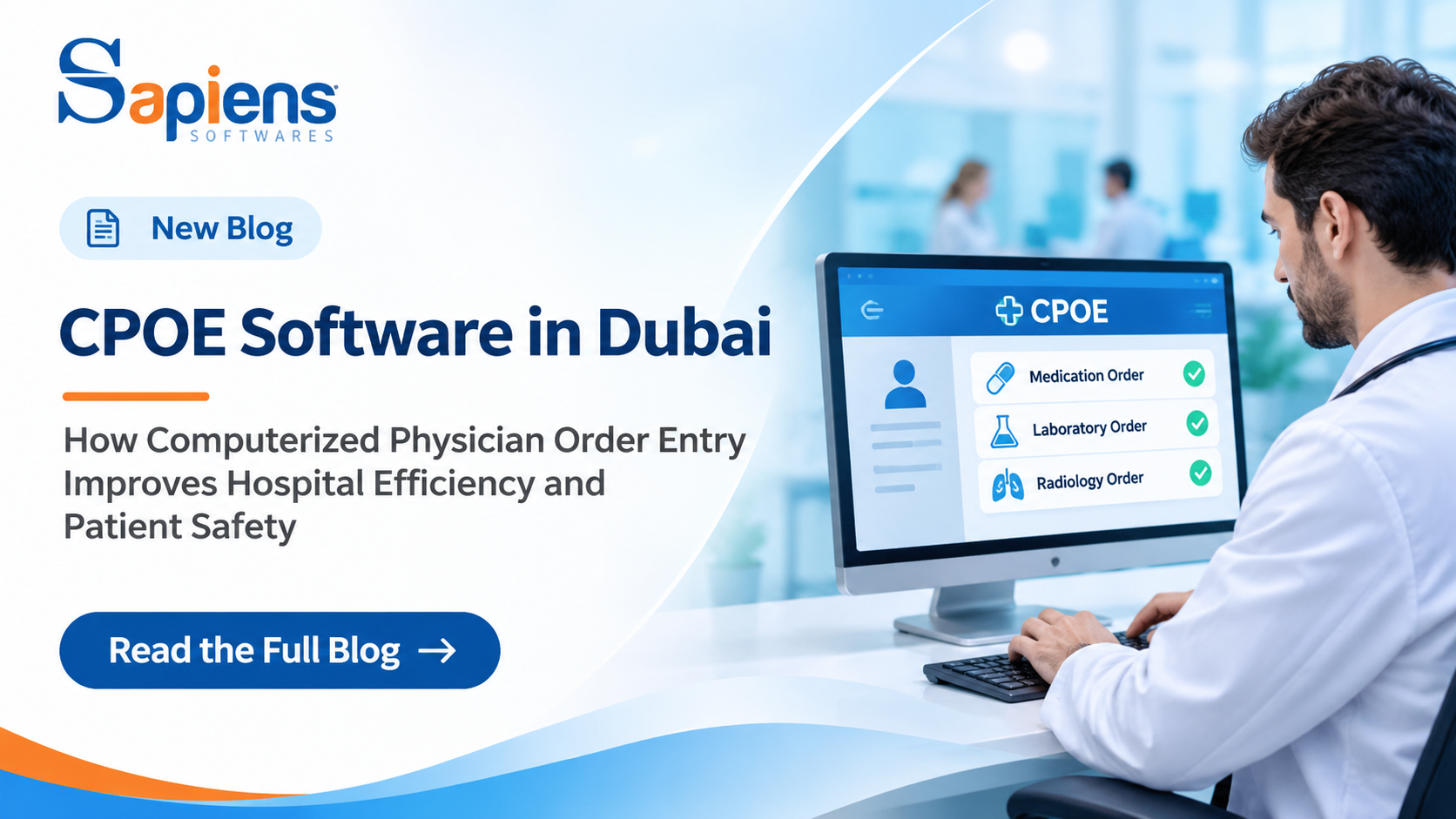
Computerized Physician Order Entry, commonly known as CPOE, is a healthcare technology that allows doctors to create and submit medical orders electronically instead of writing them manually. These orders may include medication prescriptions, laboratory investigations, radiology requests and other clinical instructions required during patient treatment.
For example, when a doctor examines a patient and requests a blood test, the order can be entered directly into the CPOE system. The laboratory team can then receive the request electronically and proceed with the required investigation. Similarly, medication orders can be shared with the pharmacy department, allowing pharmacists to review the prescription and prepare the required medicines.
By making this information available digitally, CPOE helps reduce dependence on paper-based communication and supports better coordination between hospital departments.
Why Do Hospitals Need CPOE Software?
In a busy hospital environment, even small communication gaps can affect daily operations. A handwritten prescription may be difficult to understand, an investigation request may get delayed, or staff may need to contact doctors repeatedly to confirm instructions. A CPOE system helps address these challenges by providing a structured way to create, communicate and manage clinical orders.
One major advantage is improved order accuracy. Since doctors enter instructions directly into the system, the possibility of errors caused by unclear handwriting or manual transcription can be reduced. Another benefit is faster communication. Instead of sending physical documents between departments, clinical orders can be shared electronically. This helps relevant teams access the information they need without unnecessary administrative delays.
CPOE can also improve the visibility of clinical activities. Healthcare professionals can review order information and follow the progress of relevant requests, depending on the system’s capabilities.
How CPOE Improves Communication Between Hospital Departments
A hospital operates through several connected departments. Doctors may request laboratory tests, nurses may coordinate patient care, pharmacists may review prescriptions, and diagnostic teams may conduct investigations. When these departments work with disconnected systems, sharing information becomes difficult.
CPOE helps create a more organized communication process.
For example, consider a patient admitted with symptoms that require further investigation. After examining the patient, the doctor enters laboratory and radiology orders into the system. The relevant departments receive the requests digitally and can begin processing them. Once the investigation is completed, results can be made available to the treating healthcare team through connected clinical systems.
This reduces unnecessary paperwork and helps healthcare professionals work with more consistent information.
Supporting Medication Safety Through Digital Ordering
Medication management is an important part of hospital operations. Doctors must prescribe appropriate medicines, pharmacists must review orders, and nurses must ensure that medications are administered according to clinical instructions.
Manual processes can create challenges when prescriptions are unclear or information is not communicated properly. A well-configured CPOE system can support medication safety through structured prescription entry and clinical decision-support features.
Depending on the software configuration, these features may include drug interaction alerts, allergy warnings and other relevant clinical checks. Such alerts can help healthcare professionals identify potential concerns before an order is finalized. However, these systems are designed to support clinical decisions, not replace the professional judgement of doctors and pharmacists.
The Role of CPOE in Digital Hospital Transformation in Dubai
Healthcare facilities in Dubai are increasingly focusing on digital solutions that support efficient hospital operations, accurate documentation and better coordination between healthcare professionals. A CPOE system can contribute to this transformation by reducing manual ordering processes and connecting clinical activities through digital workflows.
It can also work alongside other healthcare applications, including Hospital Information Systems, Electronic Medical Records, Laboratory Information Systems and Pharmacy Management Systems. When these systems are properly integrated, hospitals can create a more connected environment where clinical orders, patient information and investigation results can be accessed through appropriate digital workflows.
For healthcare providers looking for CPOE software in Dubai, integration capabilities, data security, user accessibility and system reliability should be important considerations.
Important Features to Consider When Choosing CPOE Software
Choosing the right CPOE software requires understanding the hospital’s clinical and operational requirements. The system should provide a user-friendly interface that allows doctors to enter orders without making their daily work unnecessarily complicated. It should also support different types of clinical requests, including medication, laboratory and radiology orders.
Integration is another important factor. A CPOE solution should be able to communicate with relevant hospital applications so that information does not remain isolated in separate systems.
Hospitals should also evaluate access permissions, audit trails, clinical alerts, reporting capabilities and the availability of technical support. Staff training is equally important. Doctors, nurses, pharmacists and other healthcare professionals should understand how to use the system correctly to achieve the intended operational benefits.
How Sapiens Supports Connected Hospital Operations
Sapiens offers healthcare technology solutions designed to support the operational and clinical requirements of hospitals and healthcare facilities. Its CREDENCE platform is a Health Information System that includes Computerized Physician Order Entry, clinical documentation, laboratory and radiology management, revenue cycle management, financial management and electronic medical records.
The platform also supports clinical decision-support capabilities, including drug-drug interaction and drug-allergy checks. Its integrated approach helps healthcare professionals manage clinical information and coordinate activities across different departments. For hospitals exploring CPOE software in Dubai, Sapiens provides a healthcare technology platform that brings multiple clinical and administrative functions together.
Conclusion
Computerized Physician Order Entry is becoming an important part of modern hospital operations. By replacing manual ordering processes with structured digital workflows, CPOE software can help hospitals improve communication, reduce transcription-related errors and support more organized clinical activities.
From medication prescriptions to laboratory and radiology requests, digital ordering helps healthcare professionals manage information more efficiently. For hospitals in Dubai and across the UAE, selecting the right CPOE solution can support long-term digital transformation and improve coordination between clinical teams.
Looking to improve your hospital’s clinical workflows? Connect with Sapiens to explore CREDENCE and discover how integrated healthcare technology can support your hospital’s operational requirements.
Book a Free Demo with Sapiens.