
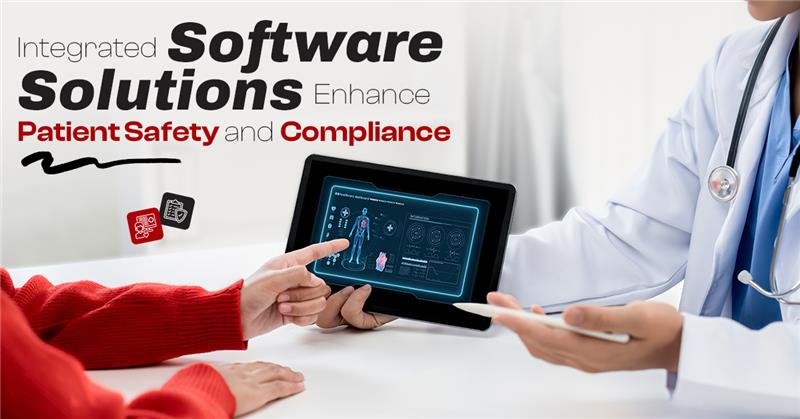
Healthcare providers face mounting pressure from two critical directions.
1. Patient safety demands are higher than ever.
One medication error, one missed allergy alert, or one communication breakdown can cause serious harm and destroy trust built over years.
2. Regulatory compliance requirements continue growing more complex.
Healthcare authorities expect detailed documentation, strict privacy protections, and adherence to growing standards. Violations bring serious penalties and reputational damage.
Managing these challenges with disconnected systems and manual processes creates risk.
Integrated healthcare software addresses both challenges simultaneously.
In this article, we’ll break down how integrated software systems streamline workflows, reduce clinical errors, strengthen data security, and help healthcare teams stay consistently compliant.
What Are Integrated Healthcare Software Solutions?
Let’s start off with the basics.
Integrated healthcare software connects all aspects of healthcare operations through unified digital platforms where information flows seamlessly between functions.
i) Core Components
Electronic Medical Records (EMR) maintain complete patient health information accessible to authorized providers throughout your organization.
Pharmacy management systems track medications from prescription through dispensing.
Billing and insurance modules handle claims processing, payment tracking, and financial management.
Reporting and analytics tools generate required compliance reports, operational metrics, and clinical insights automatically from data already in the system.
Laboratory and imaging integration delivers test results directly into patient records when ready, eliminating transcription errors and delays from manual result entry.
ii) How Integration Works
Traditional healthcare operations use separate systems for different functions.
Doctors maintain clinical notes in one system, pharmacies use different software, billing operates independently, and reporting requires manual data compilation from multiple sources.
Integration eliminates these silos by ensuring all systems share information automatically and immediately.
When a doctor prescribes medication in an integrated system, that prescription immediately becomes visible to the pharmacy, triggers automatic safety checks against the patient’s complete medical history, and generates appropriate billing charges without manual intervention
Enhancing Patient Safety Through Integration
Patient safety software capabilities integrated throughout healthcare systems create multiple protective layers that catch potential problems before they harm patients.
i) Automated Prescription Checks
When prescribing medications, integrated systems automatically check for dangerous drug interactions with current medications, allergies documented in patient history, appropriate dosing based on patient weight and kidney function, and contraindications based on patient conditions.
These automated checks catch errors that manual processes might miss, especially during busy periods when staff attention is divided. The system reviews every prescription against comprehensive drug databases and patient histories in milliseconds.
ii) Real-Time Data Access
Clinical decisions require current, complete information. Integrated systems ensure providers see all relevant patient data including recent lab results, vital signs from nursing staff, medications from the pharmacy, and notes from other specialists treating the same patient.
This comprehensive visibility prevents dangerous situations like duplicate prescriptions from different providers, missed critical lab results indicating serious problems, and conflicting treatment plans from specialists unaware of each other’s interventions.
iii) Patient History Tracking
Complete, accurate patient histories are essential for safe care. Integrated systems maintain comprehensive records including all previous visits and diagnoses, medication history and reactions, allergy information, family history, and prior test results.
iv) High-Risk Patient Monitoring
Certain patients require extra attention due to complex conditions, multiple medications, or recent procedures.
Integrated systems can flag these patients and trigger enhanced monitoring including automatic alerts when lab values fall outside safe ranges, reminders for required follow-up appointments, and notifications when high-risk patients miss scheduled visits.
Ensuring Compliance with Healthcare Regulations
Healthcare compliance solutions integrated into daily workflows make meeting regulatory requirements manageable rather than overwhelming.
UAE healthcare regulations require specific standards for patient data privacy and security, medical record documentation and retention, reporting of adverse events and quality metrics, and medication tracking and controlled substance management.
EMR software UAE facilities use must address these requirements while remaining practical for daily clinical operations. Integration helps by building compliance directly into workflows rather than requiring separate compliance activities.
Streamlined Documentation
Proper documentation is fundamental to compliance, but it’s time-consuming when done manually.
Integrated systems generate much documentation automatically including complete audit trails of who accessed patient records and when, automated timestamps for all clinical activities, structured documentation that ensures required information is captured, and automated compliance reports without manual data compilation.
Automated Compliance Monitoring
Integrated systems can monitor compliance continuously and alert staff to issues requiring attention including missing required documentation, overdue patient follow-ups, expired staff credentials or certifications, and medication inventory discrepancies.
Audit Readiness
Healthcare facilities face regular inspections and audits.
Integrated systems make audit preparation much simpler by maintaining organized, complete records that inspectors can easily review and generating required reports on demand, and providing comprehensive documentation of all clinical and administrative activities.
Benefits for Clinics and Hospitals
Digital health management through integrated systems creates advantages extending beyond safety and compliance.
i) Operational Efficiency
Integrated systems eliminate duplicate data entry that wastes staff time, reduce phone calls and messages seeking information already in the system, streamline workflows by presenting information when and where needed, and enable faster patient processing through efficient information access.
ii) Improved Patient Trust
Patients notice when healthcare providers have complete information immediately available, remember their history and preferences, coordinate care effectively among different providers, and catch potential problems before they cause harm.
iii) Reduced Liability Risk
Medical errors create legal liability and financial risk. Integrated systems reduce these risks by catching medication errors before they reach patients, maintaining complete documentation of care provided, ensuring proper consent and authorization procedures, and demonstrating adherence to standards of care.
Breaking Down Data Silos
When departments operate independently with separate systems, critical information gets trapped in silos where others can’t access it. This creates miscommunication, duplicated tests, medication errors from incomplete information, and inefficient workflows requiring excessive coordination.
Integration eliminates these silos by ensuring information entered anywhere becomes available everywhere it’s needed. This seamless flow prevents the communication breakdowns that cause many safety and quality problems.
Conclusion
Healthcare complexity continues to increase.
Patient populations age, treatments advance, regulations evolve, and expectations rise. Managing this complexity with disconnected systems becomes impossible.
Integrated healthcare software provides the foundation needed for modern healthcare delivery.
It protects patients through comprehensive safety checks and complete information access. It ensures compliance through automated documentation and monitoring. And it improves operations through efficiency that benefits both providers and patients.
Sapiens Softwares specializes in comprehensive digital health management solutions designed specifically for UAE healthcare providers.
Our integrated systems connect all aspects of your operations while addressing local regulatory requirements and practical workflow needs.
Contact us today to discuss how our integrated healthcare solutions can improve patient safety, ensure compliance, and improve operational efficiency in your facility.
Let us show you how the right software transforms healthcare delivery